Segregation and the net generation

In a recent review of a book published in The Economist, I noted something that I had suspected all along. In Grown Up Digital: How the Net Generation is Changing Your World, author Don Tapscott argues that not only are the children now growing up in a world of networked computers more intelligent and well-informed than any previous generation, they are also more tolerant of diversity and more concerned with social justice.

This is an argument that makes a lot of sense to me. After all, it doesn’t matter what skin colour you are when you’re interacting with each other on all sorts of forums, using instant messaging software, in multiplayer games, on social networking sites and even using old-fashioned e-mail. What does matter are the quality and content of your posts, messages and other forms of communications and it is by those standards that participants are judged by the communities they choose to be a part of. What could be fairer than that?

In a previous post, I addressed some concerns about racial segregation in Malaysia. I argued that the existence of vernacular schools had little impact on whether or not Malaysians of different races would cooperate and coexist peacefully in society and that the divisions between the races are the result of government policies, and not prejudices learned as children. I reiterate that stand here. The largest Malaysian forum on the internet, LYN, is full of Malaysians of all races, of all religions and many different types of schools. Yet, none of that matters on the net.

Folks are segregated on that forum, but they are segregated not by race but by the choices they make: what hobbies they take up, what shows they like, what games they play, how outgoing they choose to be and so on. It’s hard to argue there isn’t a great deal of tension between the different races in Malaysia now, but again, I say that this is due to politicians playing up the issue and instituting policies that are expressly designed to create divisions. Here’s to the hope that the net generation will prove wiser and more resistant to such divide and conquer tactics.

Top Gear reviews Proton

I spotted this from a thread in LYN. Check out these reviews of Proton cars by UK-based Top Gear. They seem to really, really hate the brand.

We don’t know what Malaysian motorists did to upset the gods, but it must have been something pretty serious, judging by the punishment they seem to be getting. Still, at least the domestic audience thinks this stuff is the norm – what on earth do they think they’re doing bringing it to the UK? Walk away.

Explaining Libertarianism using the Nolan Chart

I thought I’d post a Nolan Chart today to demonstrate what being a libertarian means. This particular version is from The Proceedings of the Friesian School by Kelley L. Ross, one of my favorite sites on philosophy. Other versions exist, for example, the one used on Wikipedia to illustrate its article on the subject. You’d do well to read Ross’ article on the subject, but to summarize, the Nolan Chart appears to have been inspired by Ayn Rand’s observation that the political right and the political left both allow individual freedom in the areas that they think aren’t important but invoke government intervention in areas that they think are important.

To the political right in the U.S. who are often strongly religious, the area that is important is personal morality. After all, to the religious, material wealth isn’t something that you can take with you to the afterlife and anyway, God helps those who help themselves, so it makes perfect sense that those who work hard are materially rewarded. Sin however is seen as a permanent stain on the soul and perhaps even a corrupting influence that can spread unless it is stamped out, and is therefore much too important to be left to the individual.

Continue reading Explaining Libertarianism using the Nolan Chart

Financial crisis revving up, not down

With the news of Citigroup getting guarantees worth US$300 billion in addition to a direct bailout from the TARP funds, there goes hopes that the financial crisis is coming to an end. Remember that not so long ago, before its share price got heavily hit by the mess, CItigroup was the biggest bank in the world by stock market capitalization. As Crooked Timber noted, not only is Citigroup the very definition of “too big to fail”, it’s so big that not even the mighty U.S. government could save it if it goes down.

Here’s a couple of links to some of the best articles on the crisis that I’ve read. A short history of modern finance from The Economist explains the two demonized financial instruments at the heart of the crisis, Collaterize Debt Obligations and Credit Default Swaps from a historical perspective. The article not only explains how they work, but also when and why they were invented and what purposes they serve in finance.

The End of Wall Street’s Boom published by Portfolio and written by Michael Lewis who gained famed for his 1989 tell-all book Liars’ Poker about the bond market. This article covers the boom and bust of the subprime mortgage market from the perspective of various industry insiders.

Continue reading Financial crisis revving up, not down

Driiiifting…

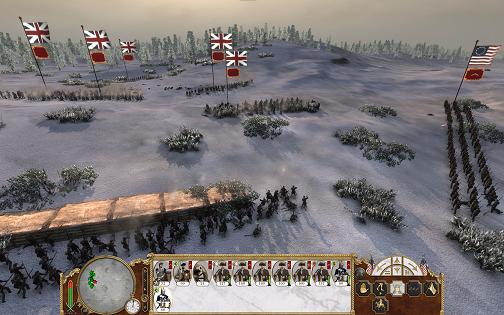
I’ve still playing GRID in between bouts of killing vast numbers of nearly naked natives in Medieval 2. I’m just about done with it though. I’ve been able to win every event consistently except for the drifting ones, and although I can understand how drifting works in the game, I can’t muster the patience to practice enough to get good at it. I curse the day racing game designers decided that making drifting a separate event was a good idea, as opposed to being a technique that’s generally useful for racing on twisty tracks.

I have to admit however that it feels immensely satisfying when you actually succeed in pulling off a good drift while racing. I won my street races in Japan using the Nissan Skyline but I’ve tested the same tracks using a Subaru Impreza and I can see how much faster you can shoot through the tracks using properly executed drifting techniques. My favourite race event is actually Pro Togue, which is racing up and down twisty Japanese mountain roads, Initial D-style, against a single competitor and you’re not allowed to touch one another’s cars. You generally need a good bit of drifting to win these events. Anyway, here’s a gallery of GRID screenshots just because they look so cool.


Should atheists organize?

Should they? The Wall Street Journal has a report on the attempts of various atheist organizations in the U.S. to make atheism more acceptable to the general public. Atheists are in many ways the least represented and most reviled minority in the U.S. with opinion polls consistently rating atheists as the least trustworthy group, below homosexuals and Muslims. The Economist noted in an article last year that only one U.S. congressman out of 535 would publicly admit to be an atheist, making him the highest-ranking politician to do so.

At the same time, atheists represent a fairly significant proportion of the population, though the exact figures depend on whom you count as an atheist. According to Adherents.com, if you count the people who put themselves in the secular, non-religious, agnostic or atheist categories as a single group, they would form the world’s third largest religious group. This is admittedly not entirely fair. The site takes pains to note that plenty of people in this category are theistic or spiritual but do not profess affiliation with any religious denomination. For many others, it would be more accurate to say that they are indifferent to religion rather than being non-believers and would not be interested in organized atheism anyway.

Continue reading Should atheists organize?

The unexamined life is a life not worth living