I always prefer it when the science news is both highly significant and relatively easy to understand and directly relevant. Most of the articles in this batch seem to fit these criteria.
We’ll start with the news that is the least approachable but it’s really not that bad. Since the James Webb Space Telescope (JWST) started delivering data, the results have seriously challenged longstanding assumptions in cosmology. The latest one is a claim that the mysterious Little Red Dots seen by the telescope is a primordial black hole with the mass of 50 million Suns. The issue is that according to our current understanding of how galaxies are formed, it should be impossible for such massive black holes to form so early in the history of the universe. So this adds more evidence that to the gathering pile that present theories about the birth and expansion of the universe are just wrong.
Next we have the discovery that a single mutation in horses led to them becoming rideable by humans and thence changed the course of history. The gene in question is called GSDMC and the researchers the date of the mutation to about 4,200 years ago. In horses, this mutation is known to reshape vertebrae, improve motor coordination and boost limb strength. They were able to show that the frequency of the mutated GSDMC variant shot from 1% to nearly 100% in a few centuries as humans specifically bred horses with the mutation they spread all across Eurasia.
One uplifting bit of news is the discovery of a process that turns plastic into fuel at 95% efficiency in one step. Other processes already exist but they include dechlorination as a separate step for PVC to avoid releasing toxic compounds. Their new process is apparently do it in a single step and handle mixed PVC materials and polyolefin waste, which includes both polyethylene (PE) and polypropylene (PP), together. There’s no mention of how expensive this is or whether this can be scaled but it still sounds like good news to me.
There’s been a great deal of debate lately about allowing smartphones in classrooms with many countries opting for a ban. This paper which covers a randomized controlled trial involving 17,000 students found that a ban did result in better grades, but the improvement was very minor. Perhaps more significantly, they also found that students exposed to the ban became more supportive of phone-use restrictions, suggesting that a ban might be popular with both parents and students. Yet this is very far from the last word on this issue as others have pointed out that the study fails to account for the possible benefits of using smartphones in schools. This is one area in which many commentators feel like they need to have their say.
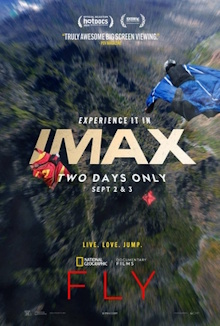
Based on its premise, I expected this to be a visual extravaganza, especially since this is a documentary made by National Geographic. What I did not expect was how brutal it is in showing how closely death stalks the community of base jumpers. This film was shot over a period of seven years, enough time for there to be big changes in the lives of the participants featured here. As the directors were astute enough to focus on three romantic couples in particular, it’s the human aspect that is so gripping as we watch them grapple with fears, injuries and death.
This may be a recent release but between its stark black and white visuals and the post-World War 2 Italian setting, sure doesn’t look like it. It’s deliberately anachronistic in more ways too, being shot in the neorealist style of the 1940s and 1950s and being about how horribly oppressed women of that time were. Yet its genius is that even as it superficially purports to be a film of that era, it subverts expectations to deliver a thoroughly modern message of female empowerment with a dose of wry humor. The twist at the end is perhaps too abrupt but does successfully prevent the film from reverting back into the usual clichés.
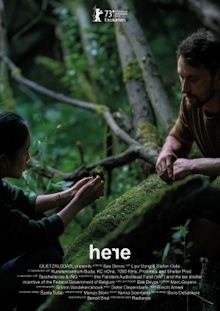
Bas Devos is a Belgian director who is new to me and his passion seems to be to showcase the city of Brussels and perhaps the people who live in it. That might not be immediately apparent in this quiet, contemplative film and indeed it’s hard to tell for a long time what it is at all. I think I do get what the director was trying for here, in showing the forest that exists as part of Brussels and in emphasizing the immediacy or thisness of small moments. But to fully achieve the intended effect would require truly sublime imagery and cinematography and I don’t think this film quite reaches those heights.
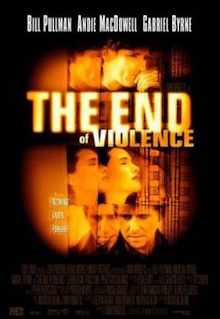
Wim Wenders has made many amazing films and I’ve covered quite a few of them here. Here’s one of his most critically planned films which I added to my list anyway because Scott Sumner had some nice things to say about it. This is strange film that will leave you in confusion much of the time yet it does have a comprehensible plot. It has a very cinematic feeling, but almost too much so until it feels like a caricature of Hollywood movies. Wenders has made excellent American films before so it’s not like he doesn’t have an excellent grasp of both the language and the setting. So it’s strange that he seems to be deliberately trying to be bad at times. It’s an interesting project but not a good film at all.
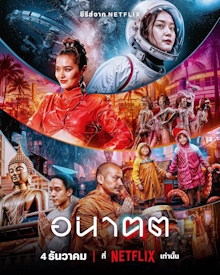
This is a made in Thailand short science-fiction anthology series that received wide release through Netflix. Similar to shows like Black Mirror, each episode is its own standalone story with a couple of them being almost films in their own right. None of the science-fiction ideas in here are particularly original and the plot seems meandering a lot of the time. But I will credit this for being a fantastic effort. It’s bold in challenging established moral values and norms, genuinely dares to imagine what Thailand might be like 20 to 30 years in the future and most of all boasts such high production values that I’m astounded. It’s doesn’t just look authentically futuristic, they have superb art direction as well.
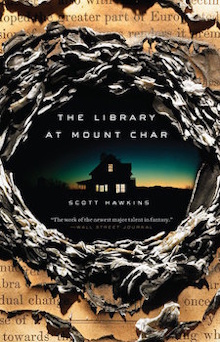
This book seems to be something of a sleeper hit that I’d only learned about from a forum. It’s the first novel by Scott Hawkins whose day job is a technical writer of computer-related books. His success feels like it came out of nowhere but of course it’s really the result of decades of hard work and innumerable failures. Many others have described this book to the work of Neil Gaiman but I also detect some similarities with Susanna Clarke. The genre is ostensibly horror or fantasy, yet this is such a strange book that it eventually morphs to something like science-fiction.