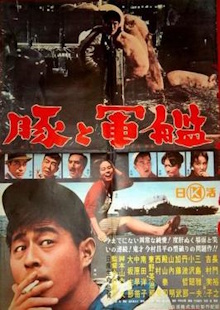
Continuing the string of films that show the darker side of Japan, especially under US occupation, here’s one by Shōhei Imamura. The title sounds ridiculous but makes complete sense given the context and even earns its comedic tone. At its heart is a rather old-fashioned love story between a girl and a bad boy but the incisive message about cultural imperialism elevates it above the usual fare. It’s rather cleverer and more multifaceted than it initially appears even if the moralizing is a tad obvious.
I consider the Knives Out series to be the best detective films currently being made so I’m always down for more of them. This one is especially delightful for me as it pits the atheistic and rational Benoit Blanc against the mystery of religion. It does take a while to get going as a dead body doesn’t even show up until maybe an hour in. I think it falls short of the cleverness of the first film in how the murder was carried out but the motivations of the characters, the religious theme and how it ties in with current events all make up for it.
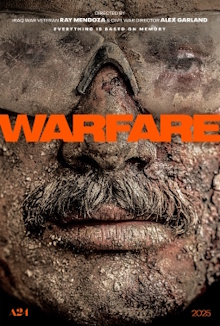
As I noted earlier, Alex Garland’s work gives me mixed feelings yet here I am back again watching his latest. He does share directorial credit here with Ray Mendoza who helped advise Garland in the making of Civil War and more importantly was a participant in the real-life battle that this film is based on. The result is a stunningly authentic recreation of the incident and probably the single best portrayal of what modern urban warfare is like on film. True, it has no wider ambitions and says nothing about why the US is even in Iraq, but it doesn’t need to as what it does is perfectly fine and even much needed. The question is, why didn’t Garland aspire to this level of realism in his earlier film?
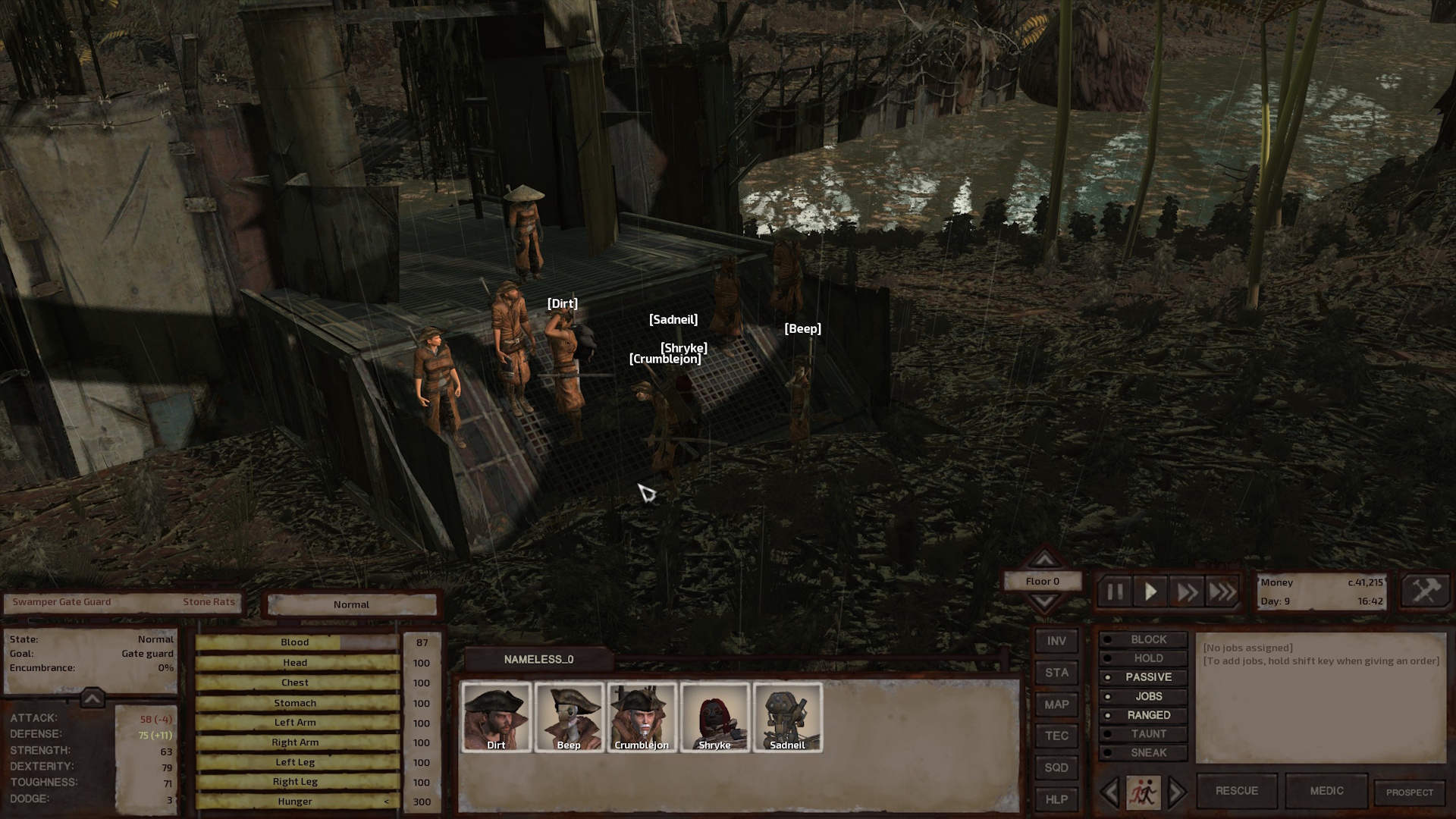
I like to try weird and novel games. Sometimes this is rewarded when I come across unexpected gems. Often this is not. Kenshi is a game that unfortunately falls into the latter category for me. Yet if I’d encountered it at a much earlier age, I can see myself falling in love with it. The game is advertised as a kind of RPG in which you can do almost anything and that’s largely true. But it’s also rather ugly, has a terrible interface, and is fully of janky, inconsistent mechanics. You can get all kinds of amazing stories going with your characters, but you’d also have to put up with a lot of grinding and boring moments in which nothing happens and I’m just too old for that now.
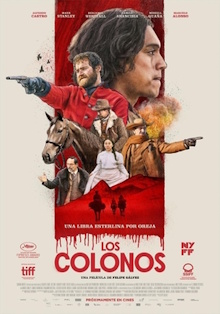
This Chilean film by a new director Felipe Gálvez Haberle is instantly recognizable as a Western. It has rugged characters riding horses across vast landscapes, gunfights and especially the killing of natives. This is no action movie however as the action is all one-sided. The cowboys here are literally committing genocide against defenseless Indians on behalf of their wealthy rancher employer, based on historically real events. It’s brutally blunt both in its messaging and in its imagery but it certainly succeeds in its goal of bringing more attention to an atrocity that most of the world is probably unaware of.
We liked Asura so much we decided to give this earlier series that Hirokazu Kore-eda also made for Netflix a shot and its focus on food would only be a plus for my wife. However it becomes evident quickly that this is not at all in Kore-eda’s usual style. Instead it’s a sweetly wholesome story without an ounce of darkness in it and barely any conflict at all. I suspected that this was adapted from a manga and indeed it was so. It’s prettily made and serves as a neat pocket tour of the customs surrounding the geisha of Kyoto but it’s too superficial to engage with seriously.
A slow start to the year in terms of science news even the world is being rocked on the geopolitics front.
Maybe it’s just me but I’ve been noticing that people have been focusing more on aging healthily, perhaps due to a new breed of activists such as Bryan Johnson. They should take heart in this new development about a potential treatment for cartilage loss. It works by blocking the 15-PGDH protein which becomes more abundant in the body as we age which is thought to inhibit the regeneration of cartilage. In mice, they found that it led to thicker knee cartilage in the older animals they tried in on and there are ongoing trials in humans in humans. The hope is that this will successfully treat osteoarthritis without having to rely on injecting stem cell.
Next is a paper that will likely be of interest only to computer science nerds but is a clear sign that Chinese scientists are now very much state of the art. It presents a new algorithm to find the shortest path from a source to every other vertex in a graph. For over 60 years, the best possible algorithm to solve this fundamental graph problem was Dijkstra’s algorithm and it was thought to be optimal. Now this team presents a new way to solve the problem without having to sort the entire set of vertex distances in advance. It’s a huge deal in the world of computer science as such algorithms are widely used in all sorts of networks and even the smallest of optimizations can scale up.
Finally here’s the results of an experiment about creating the largest ever superposition yet. Instead of mere electrons or even single atoms, the team assembled clusters of around 7,000 atoms of sodium atoms and directed them through the equivalent of slits constructed with laser beams. They proved that rather than behaving as a single object, each cluster behaved like a wave, spreading out into a superposition and interfering to form a pattern. The results are identical to that of the famous double-slit experiment with tiny particles and suggest that there truly is no limit to how big a superposition can be, provided it can isolated enough, as predicted by quantum theory.