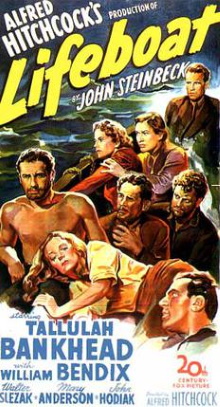
I’ve learned how pointless it is to say that this next one might be the last Hitchcock film I need to watch and someone always has something interesting to say about one of his work that I’ve yet to watched. This is an early one that is set entirely on a single lifeboat in the middle of the ocean. The script was written by John Steinbeck but apparently it was Hitchcock who came up with the initial idea. As usual the great director makes it work and despite the limited nature of the setting this wasn’t a cheap film to make either as filming on water is notoriously expensive and some of the stars were rather expensive.
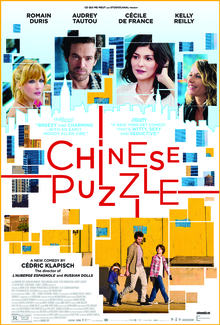
This is the final installment of the trilogy that began with L’Auberge Espagnole and this time Xavier’s adventures in life brings him to New York. There are many film trilogies of course but it’s hard to think of many that are about the lives of the same group of people over real time, the best known example being of course the Before trilogy. This one is unfortunately nowhere as great but the sentiment of passing time as we watch the aging actors play familiar characters remains a powerful one. This last film is particularly good as well, comparable to the first one and far better than the forgettable second one.
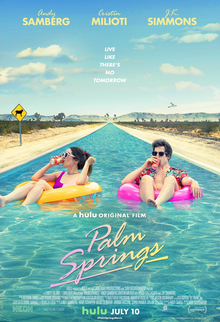
It’s been a while since we had a variant of the Groundhog Day formula on film and this one actually manages to be rather good. It is a romantic comedy as well but changes things up by having both people being included in the loop and that allows this to be a far less solipsistic experience. At the same time it feels much more science-fiction with characters who experiment to find out the limitations and boundaries of the loop they are trapped in.
Continuing on with my run of short games, this is a totally free game that can be easily downloaded on itch.io but will also be coming to Steam soon. As you should be able to see from these screenshots, this is an old-style point-and-click adventure game with pixel graphics. The title itself refers of course to the famous novel by Italo Calvino, which I actually have read a while back due to my wife’s insistence, but barring some minor references the game doesn’t actually have anything to do with the book.
Here’s another zombie movie, this one from Canada. The unique twist here is that the events are centered around a community of First Nations Indians who are all immune to the zombie virus. Of course they must still deal with the other perils of a full blown zombie pandemic. Unfortunately while there is some promise early on here and there is some attempt at a deeper theme, it suffers from a weak follow-through and ultimately feels like a comic book movie. Visually it even tries to look like a comic book movie with some animated frames to illustrate some scenes.
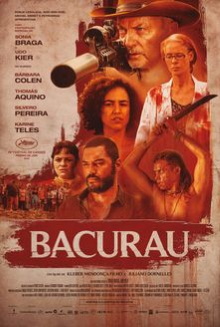
It’s kind of hard to judge this Brazilian film. At first it seems strange but very promising with what looks like a near-future dystopia setting. Then when we learn of the plot by the evil Americans, I feel like it takes a sharp dive in quality. But then when we see the villagers’ response, things get awesome again. Wikipedia classifies its genre as Weird Western, one of the more unusual classifications, and it sounds about right to me.
Decently strong mix of articles this month from various disciplines, with an emphasis on discoveries that have a good chance of being very practically useful in the near future.
Personally the most exciting bit of news to me is that it may soon be possible to make diagnosis of depression more reliable through a blood test. The test works by looking at 13 RNA markers that indicate how active the underlying genes have been, genes that are particularly correlated with the incidence of mood disorders or have been identified in previous work to be associated with depression. The test should also be capable to predicting who will go on to develop bipolar disorder and how serious the condition will be. This test, if it passes the testing stage, will likely only be used to accompany more traditional ways to diagnose rather than be used by itself, but it should be obvious to everyone how significant this will be if it is widely deployed.
But I suspect that most people are excited about is TMSC’s announcement that it has invented a semiconductor that is smaller than 1 nanometer. I don’t know much about the details except that semi-metal bismuth as electrodes. TMSC also cautions that the technology may very well not not make it to commercial production at all. But it signals that we haven’t yet seen the end of incremental improvements to chip technology.
Another piece of technology that I suspect will be deployed rather quickly is vertical wind turbines. The sight of windmill-shaped wind turbines are now a familiar sight in many landscapes but it seems that vertically oriented ones are more efficient and perform even better in a grid formation with some turbines behind others. In the traditional arrangement, this would result in turbulence in the rows of turbines behind those in front.
This paper, though it has yet to be peer reviewed, could have major ramifications as well. As we all know, plants need nitrogen and a lot of what fertilizer does is give nitrogen to plants. This paper describes how a plant that is self-sufficient in nitrogen, by being able to use the nitrogen present in the atmosphere, could be made through synthetic biology.
Finally a paper in economics that I believe adds more nuance to our understanding of wealth inequality. It describes how career earnings growth in the US more than doubled between 1960 and 2017 and this was because of the growing importance of jobs that requires decision-making skills. Accordingly while workers used to hit peak earnings in their 30s, they now hit it in their 50s. This reflects the importance of critical thinking skills in jobs and how learning skills and knowledge over a lifetime adds a great deal of value. I believe this helps explain some of the frustrations of the young in the present day and the disparity in earning potential.