A Game: The Witcher (Enhanced Edition)

If you’ve ever felt that every fantasy RPG always rehashes the same generic tropes over and over again, then you might want to check out The Witcher. The first release of the game last year by its Polish makers at CD Projeckt suffered from numerous technical hitches and a Polish-to-English translation that sometimes left players scratching their heads. Thankfully, the newly released Enhanced Edition of the game, available as free download for customers who had bought the original, fixes many of these problems and includes extended and fully voiced translations, so RPG fans have no excuse to put off buying this gem, even if it is still a bit unpolished.

The game is based on the Polish book series of the same name by Andrzej Sapkowski and as such is set in a medieval fantasy world with a distinctively eastern European twist. It is a grim and dangerous place where at night simple folk bar their doors and huddle safe in their houses while monsters roam at will. The player takes on the role of one Geralt of Rivia, the most famous of the few remaining witchers in the world who are tasked with defending humanity from these monsters, for a fee of course. As the game explicity states, witchers aren’t noble knights in shining armour, and as you’ll soon learn over the course of this game, there’s no unalloyed good in the world since everyone, and I mean everyone, has an angle.
Continue reading A Game: The Witcher (Enhanced Edition)

Why the USA is a great democracy.

I get frustrated whenever I hear people criticize the USA for being a flawed democracy or not being a real democracy. It’s true that elections in the U.S. cost a whole lot of money and that lobbyists representing special interest groups wield a disproportionate amount of influence, but for all that, the U.S. truly represents a democracy like no other and this editorial published in The Economist nicely sums up why.

The whole article is worth reading, but I’d like to point out this passage in particular:

But the best thing that can be said for the system is that it is so democratic. In most countries party leaders are chosen by political insiders. In America rank-and-file party members (and some independents) get to choose—and this year they upset all political calculations by rejecting the inevitable Mrs Clinton on the left and choosing the maverick Mr McCain on the right.

Every democracy is flawed, I don’t need to quote Winston Churchill again, but America’s version, with its open primary allowing the grass roots to push up the candidate of its choice, is probably the best of the lot and surely deserves recognition for that.

Bible Advisory

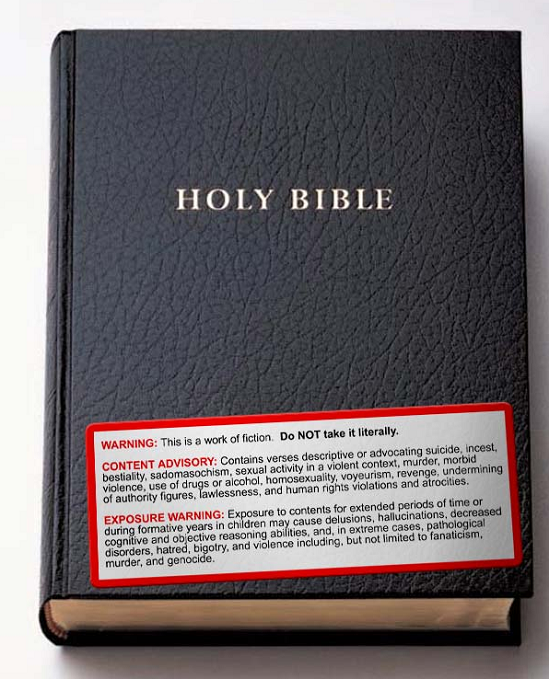
Came across this funny image of the Bible on QT3 a while back. I’m not too sure where it was originally from though. The thing about humour is that in order for the joke to work, it needs a grain of truth in it.

Anyway, I know I haven’t been writing much for my own blog lately. I think I’ve written more and more interesting stuff as comments on other people’s blogs and on LYN than on here.

In other news, check out this article in Slate magazine, “Does Religion Make You Nice?”. It’s not very kind on atheism, but makes a fair point about the importance of building communities.

Shout-out in The Witcher

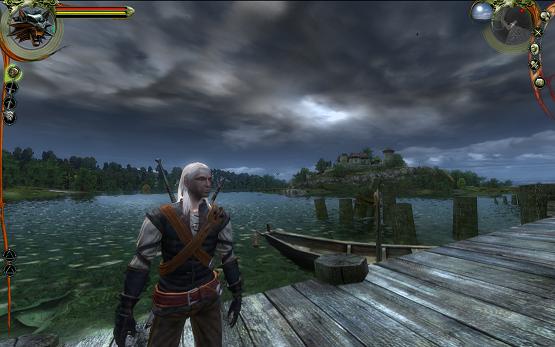
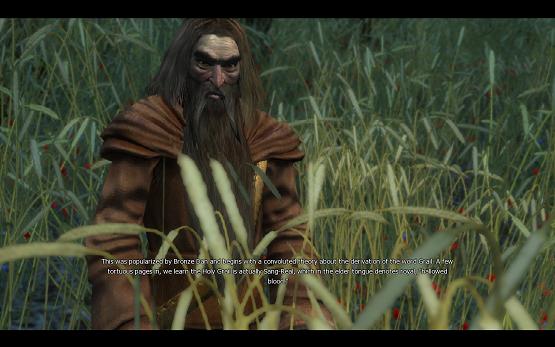
I noticed a sarcastic shout-out to a popular novel while playing The Witcher the other day, so I saved a screenshot of it. The full text as follows:

This was popularized by Bronze Dan and begins with a convoluted theory about the derivation of the word Grail. A few tortuous pages in, we learn the Holy Grail is actually Sang-Real, which in the elder tongue denotes royal, “hallowed blood.”

I’ll leave it to the reader to notice which book is being alluded to.

I’ve just finished the game last night. The ending was a real shocker. Dramatically powerful, yes, but also painfully cruel to the player. Look out for a full write-up soon. In the meantime, I’m playing the two downloadable adventures for it, The Price of Neutrality and Side Effects, available from the official site of the game.

Recent Interesting Science Articles (Oct ’08)

Wow, I haven’t done one of these in a while since my Economist subscription lapsed. I only renewed it fairly recently. Anyway, here are the three most interesting science related news items that I’ve seen in October, with one of them from The Economist. Let’s start with that one first.

The biological causes and effects of homosexuality is one of the perennial questions when you try to explain human nature in scientific terms. The most obvious of these questions is why homosexuality, since it can in large part be attributed to genetic causes, persists when common sense dictates that homosexuals shouldn’t be in a good position to pass along their genes to the next generation? A recent article highlights one possible answer: genes that make men more feminine and genes that make women more masculine confer a reproductive advantage to the person who possesses them, so long as they do not actually push them into homosexuality.

Continue reading Recent Interesting Science Articles (Oct ’08)

Tallest LEGO tower

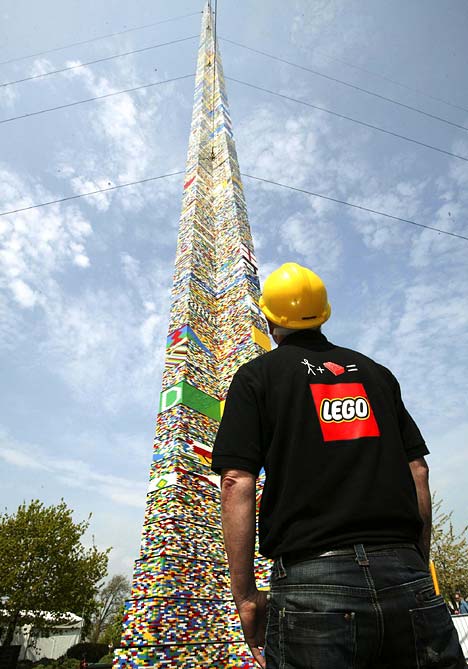
It’s been a bit busy at work, so here’s a quick post on something that I found last week. It’s the world’s tallest LEGO tower and it was built in the Legoland Windsor theme park in the U.K. out of 500,000 LEGO pieces. It’s a pretty awesome sight, though after reading the comments section I discovered that there’s actually a steel pole running through the middle of the tower, so that kind of feels like cheating. There are more photos at the original site for anyone who’s interested.

Christians Praying to Golden Calf

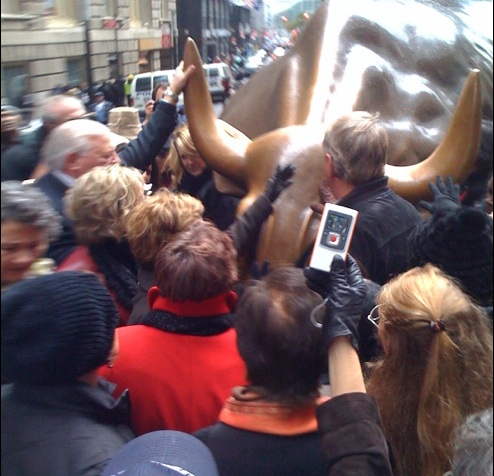
I love the wonderful, wonderful irony in this. Apparently a large group of Christians organized a mass prayer at banks, stock markets and other financial institutions all over the world to ask for God’s intercession into the current financial mess. Here’s an excerpt from the original call to prayer as reported by the Christian Broadcasting Network:

For these and other reasons Cindy is calling for a Day of Prayer for the World’s Economies on Wednesday, October 29, 2008. They are calling for prayer for the stock markets, banks, and financial institutions of the world on the date the stock market crashed in 1929. They are meeting at the New York Stock Exchange, the Federal Reserve Bank, and its 12 principal branches around the US that day.

“We are going to intercede at the site of the statue of the bull on Wall Street to ask God to begin a shift from the bull and bear markets to what we feel will be the ‘Lion’s Market,’ or God’s control over the economic systems,” she said.  “While we do not have the full revelation of all this will entail, we do know that without intercession, economies will crumble.”

The photo above, taken from Wonkette, is of the said group praying at the aforementioned bull statue on Wall Street. The irony is obvious to anyone with even a passing knowlege of the Bible since the bull statue on Wall Street is a huge golden bull, and instantly brings to mind the story of the Golden Calf from the book of Exodus. As the Wikipedia entry indicates, one interpretation of the story, apart from the more obvious one as an example of the sin of idolatry, is that it was intended as a Biblical criticism on the pursuit of material wealth. A double irony indeed.

I can only guess that these Christians haven’t been reading the Bible much.

The unexamined life is a life not worth living