Blue Ruin, made with a budget of less than US$500,000 with some of it raised from a Kickstarter campaign, was undeniably the indie darling of 2013. Made by a director, Jeremy Saulnier, so unknown that he doesn’t even have a Wikipedia page yet, it won almost universal acclaim from critics. That makes it a must-watch in my book.
The box office statistics for this South Korean historical epic are really something to behold. It sold more than 17 million movie tickets, out of a population of approximately 50 million people. Outside of its home country, it did respectable, but not spectacular, sales. Sure, it’s a nationalistic puff piece, but these numbers suggest that The Admiral might be a film worth watching if only for the novelty of a South Korean mega-blockbuster.
A few minutes into this film, both my wife and myself thought it seemed awfully familiar. It turned out that we had watched it before, probably a couple of years earlier when my wife wanted to sign up for a previous iteration of the same film course. Both of our memories must be failing for us to not have remembered it. But the movie is enjoyable enough that we had no difficulties with watching it a second time.
Our list of films to watch has grown so long that we can’t remember whether this one was added by my wife (because she remembers it being highly praised back when she was in high school) or myself (because it shows up often in lists of best films). Either way, this means that Edward Yang’s A Brighter Summer Day is a film that both of us really wanted to watch.
Out of all the genres of fiction, I think that comedy is the hardest to cross cultural boundaries. It also doesn’t help this film’s case that while the Marx Brothers are well-known in the US, I don’t believe that they are quite so established internationally, compared to say Charlie Chaplin or even the Three Stooges. For my part, I knew next to nothing about them save that they exist and that the iconic Groucho glasses disguise comes from one of them.
With Applause, we move from the silent film era to the talkies. Surprisingly, this isn’t just one of the earliest talkies, it also pioneered a number of interesting innovations while being its director Roubien Mamoulian’s first feature film. Unfortunately, its technical achievements are much more interesting than its annoying characters, unsatisfying plot and simplistic moralization.
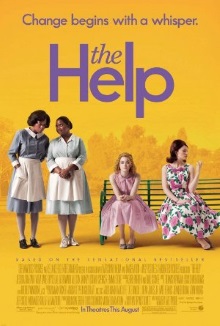
I think it says something that when my wife saw the DreamWorks logo appear, she adjusted her expectations accordingly, especially in the context of this being a film about white and black race relations in 1960s United States. We’d look out for a competently put together film that is aimed squarely at the mainstream market, a strong social message, plenty of entertaining bits and most of all an uplifting and hopeful ending. In the event, this was exactly what we got.