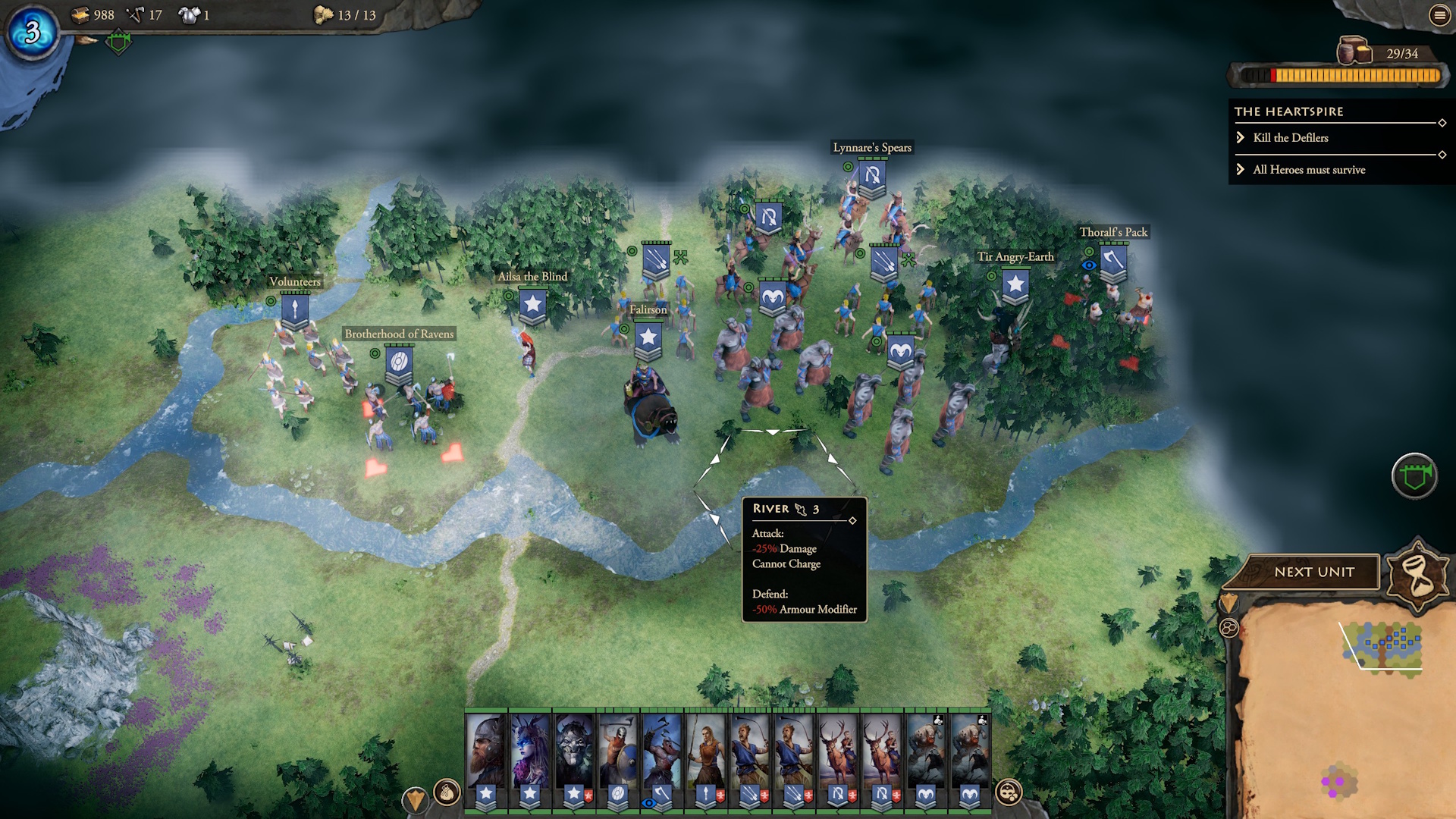
I first played the original Fantasy General during my schooling days. It was a pirated copy back then of course and without a manual, I never had a firm grasp of the ruleset and was never able to beat it. I never forgot the game however and it seems that it has its share of fans. More than twenty years, another company made a sequel and now here I am playing it, because I noticed that it was being given away free on Steam.
The story is meant to take place a few hundred years in the same world but it’s so generic and forgettable that I barely paid attention. You play as Falirson, the son of the chief of a highland barbarian clan, and a descendant of the hero from the first game. While learning to be a war leader, you learn that another clan the Misneach is encroaching on yours. Worse, while the clans are meeting to hash out a peace treaty, they betray you and kill your father, making you the leader of the clan. You discover that the Misneach are working for the wider Empire. In pursuit of vengeance, you and your allies must strike out of the Highlands, venture into the Sunken Lands where the Empire is gathering magical resources for an unknown purpose, and finally confront the Empire in its seat of power. Though there are a few branching options here and there, the campaign is linear and uses fixed maps. It’s quite long, takes place across varied terrain and lets you play with plenty of units of different types.
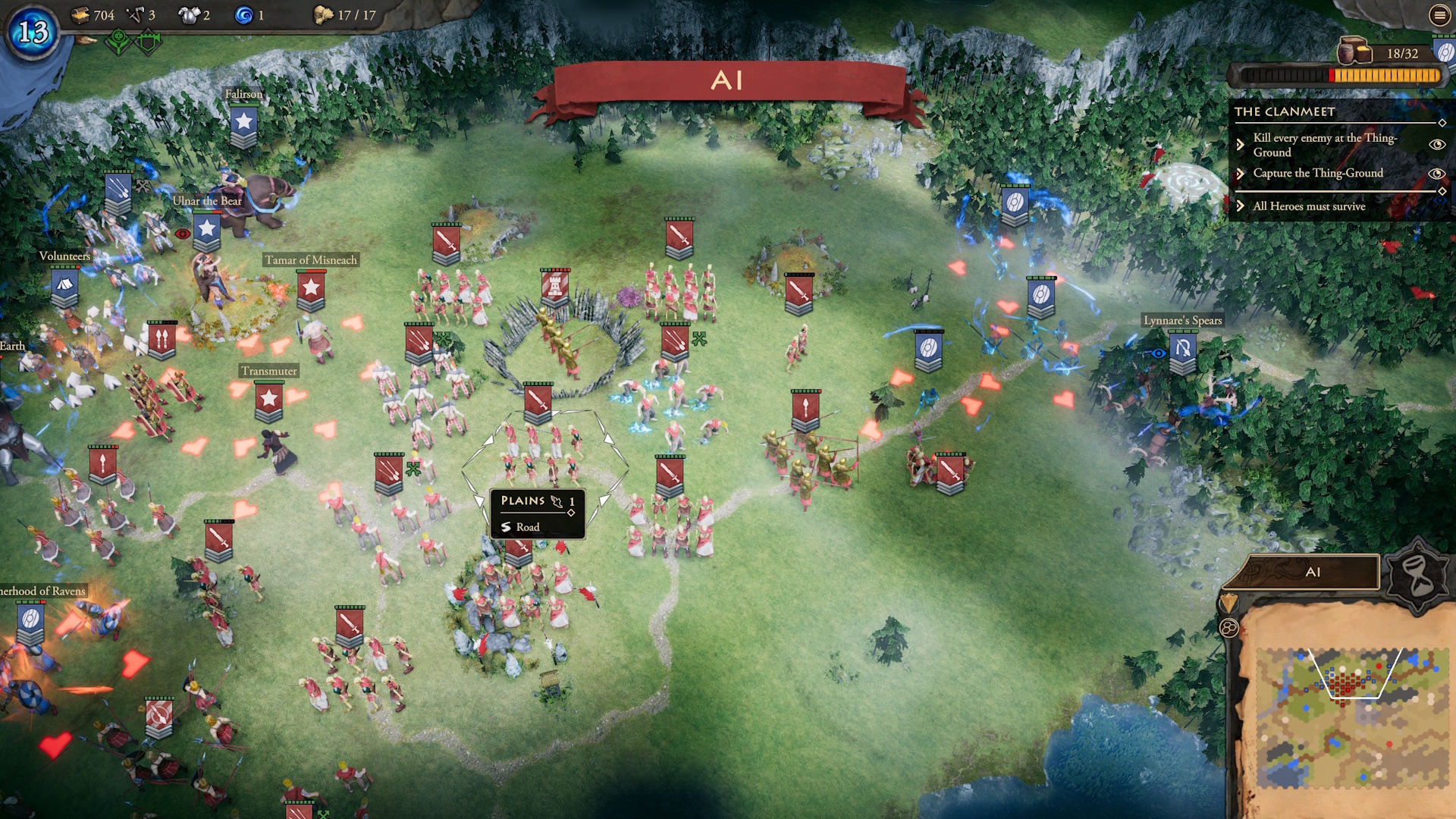
Like its predecessor, this is a turn-based wargame that is played on a hex map. As advertised, it has all of the usual rules such as bonuses for standing in the right terrain, morale, flanking and so on. But I will note that this being a less serious wargame, these situational bonuses are often outweighed by the base stats of the units. This makes sense in the context of fantasy so you have super powerful units and monsters that can only be taken down by many other units focusing fire on them. There are also flying units which I remember being very annoying in the first game, spell-like abilities, artillery units and so on. You start out having access to only the barbarian units but can eventually pick up units of other factions as you progress through the campaign.
Heroes and units both gain experience through combat, becoming substantially more powerful. You really don’t want any of your units to die. Units can be upgraded to more powerful versions, gated by resources like gold, weapons, armor and liquid mana. Heroes have a talent tree. All units can also be equipped with artefacts which further specializes what they are capable of and you can even spend resources to unit to train them to gain new abilities. In theory, it’s fun to be able to develop each unit so deeply. But in practice, with an army of more than 30 units, it’s a lot of micromanagement. Two units of say Fire Archers may start off at the same base, but their levels, training and equipped artefacts make them vastly different in terms of capability. It’s a real pain to be able to remember what each can do and employ them optimally.
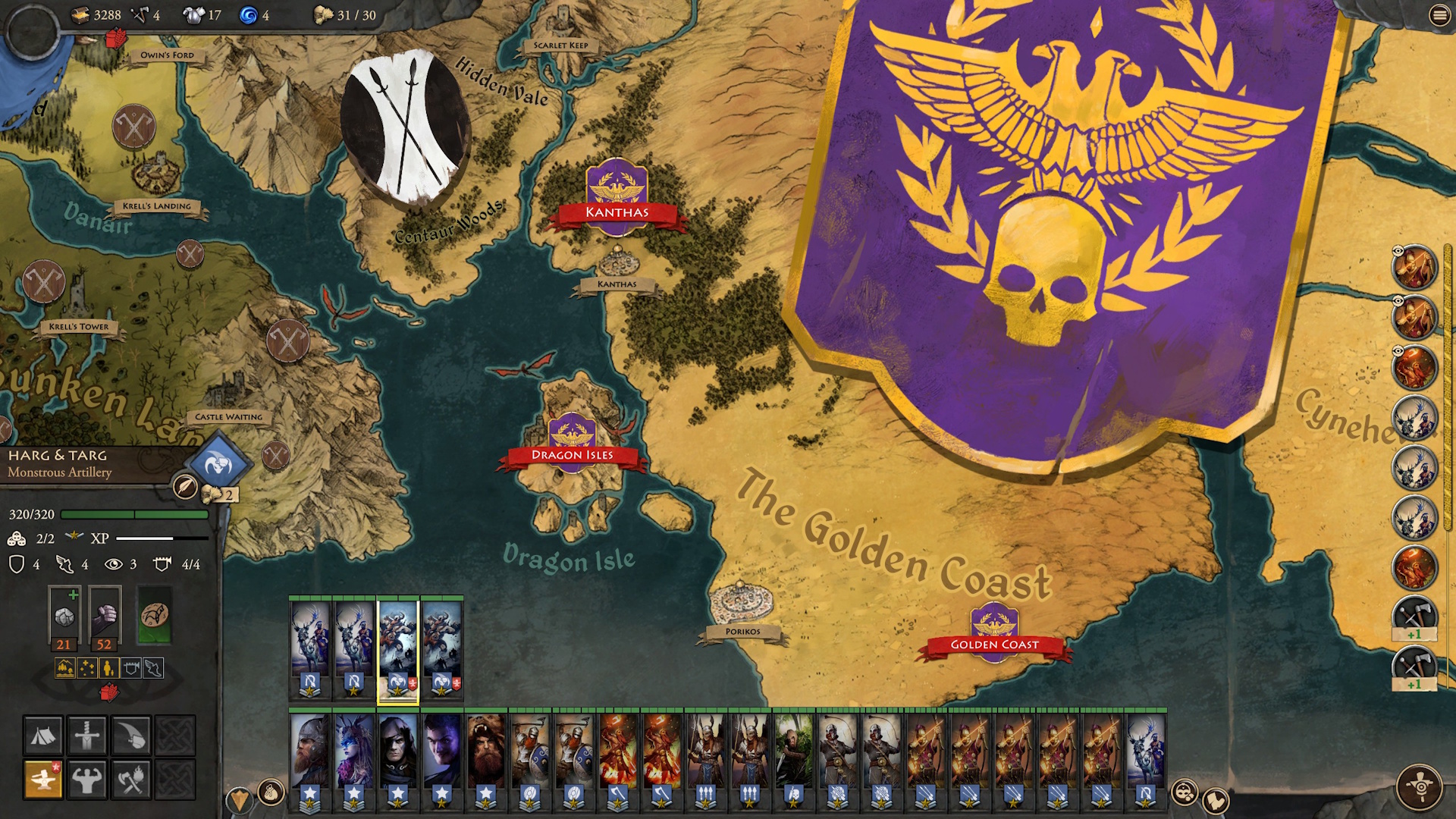
There’s no hard turn limit so you can theoretically take as much time as you need to beat a mission. But there is a wealth timer mechanic which give you bonus gold the more time you have left available. What’s more is that if it runs out entirely, you stop being able to gather resources from the map so you have a strong incentive to hurry. Every settlement on the map can be raided for gold and you are supposed to raid all the lizard hovels for the very rare liquid mana. In addition, there are many camps, caves, ruins and other places of interest on the maps to obtain resources from. It’s a little irritating to me as optimal play consists not only of beating the enemy forces present on the map and achieving your objectives but also of figuring how many extra units you can safely divert to hoovering up everything from the map. As these upgrades make a huge difference in power, you really do want as many resources as you can get.
The missions themselves are alright and remain reasonably challenging up to the end of the campaign. They strongly emphasize offensive actions as there are very few instances in which you’re the defender. Combined with the need to scour the map of resources in a timely manner, you have a strong incentive to favor fast moving units that can cross even difficult terrain. I’m not too happy overall with the balance. Morale in theory matters quite a bit but later in the game, many enemies are undead units who are immune to psychological effects. Spending mana to summon units is way too good a deal, especially when those summons come with spell-like abilities that don’t cost mana to use. As flanking bonuses are minimal, it’s usually better to have plenty of ranged units to take down difficult enemies rather than crowd them with your own melee units. One particular hero’s power Shackles of Pain is way too overpowered. It redirects all damage from one unit to another which would be useful to make a temporarily invulnerable tank unit. But it still works if both targets are enemies, so you can kill a super tough enemy general in one turn by linking him to a weak enemy with poor defenses. Once you learn this one trick, it trivializes the boss enemies the game throws at you every once in a while.
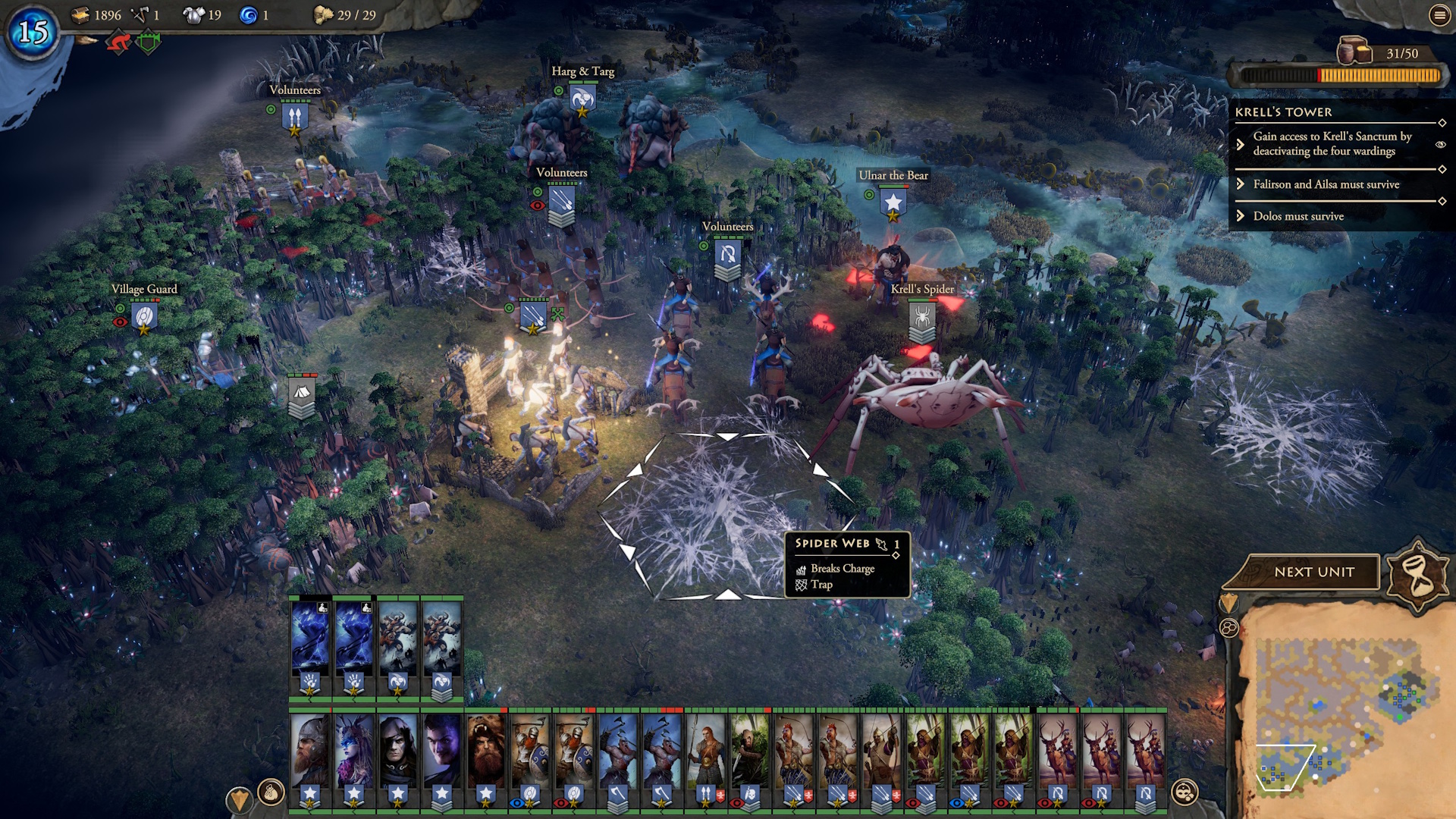
On the whole this is alright as a wargame. You get to build up and personalize your own army, fight in big battles with your units and it draws on all the usual fantasy tropes like dragons, centaurs, ogres, undead and so on. But much like the story, it’s almost aggressively generic and so fails to stand out in any way. The strategy portion is simple enough that it doesn’t really strain your brain. Instead the difficulty lies in learning the particularities of each map and being massively outnumbered. One trick the game likes to use is forcing you to split your army at the deployment phase and you have no idea what kind of opposition each part of your army is going to face. So you just learn through trial and error and reload as needed. Like I said, it’s alright gameplay but nothing special.
Coming to this after playing a spate of Warhammer 40,000 themed wargames like Sanctus Reach and Gladius, this one compares unfavorably. The stronger, more distinct theme makes a huge difference. Units are more differentiated and even the tactical challenges more interesting. I think wargames should be about achieving mission objectives, not exploring the map for resources at the same time. So while it’s satisfying that I’m finally able to complete a Fantasy General game, I’m not very impressed by this at all and see it as just something to check off on my todo list.