Orson Welles is a very inconsistent director to say the least as he is known for plenty of stinkers along some of the most celebrated films of all that time. This noir was at the time of its release considered one of those stinkers but opinion on it has improved since then. I don’t think I like it very much given that it tries too hard to be clever rather than to be true to its theme. But it is a fascinating film that uses some inspired and beautiful camerawork so it probably is worth watching all the same.
As usual this was added to my list a while ago while gleaning through critics’ picks of most notable films but unsurprisingly as Israel isn’t a large country, we can recognize a couple of faces here from the television series Srugim. This one deals with the topic of marriage among observant Jews as well but doesn’t otherwise seem as if it was made by the same creative team. I did not like this film at all but I am amused that it is very different from what I would expect out of an American film using the same premise.
First month of the year and there is already plenty of cool science stuff.
We start with the bit of science news that has been shared the most this month. Many tourists who have visited Bali would know about how the long-tailed macaques there are notorious about stealing items from tourists. A new paper however asserts that the monkeys have even learned how valuable different objects are to humans. Not only are they able to steal objects that have no inherent value to them such as wallets and hats in order to exchange them with things that they do want such as food, but they have learned the relative value of different objects and will only exchange objects of higher value with food that is more desirable. Furthermore they have determined that this is a learned behavior as adult monkeys are the best able to make such valuation judgments while juvenile ones make no such distinctions.
By now everyone will have heard of mRNA vaccines, an approach to making vaccines that is completely different from inactivated vaccines. But this technique is being used to treat more than just covid-19 as this paper talks about a promising vaccine for experimental autoimmune encephalomyelitis. This is an extremely scary condition in which the immune system acts up and starts attacking your own nervous system and for which no treatment currently exists. The news about this jumped out at me immediately because my wife and I actually know someone who has this condition.
Next is an article about how even the simplest of organisms, in this case, non-photosynthetic bacteria have internal clocks that align with the Earth’s 24-hour cycle. Scientists already knew that photosynthetic bacteria have such clocks, because they rely on the light of sun to make energy, This time they have found similar cycles of gene activity in a soil bacterium that does not use photosynthesis and that such cycles even in an environment that is always dark. This suggests that this is an essential feature of all life on Earth even if we don’t why or how it is achieved.
Finally for fun, here is an article about how the complete genome of the platypus has just been released. Just as you might expect from this weird hybrid animal, its genes are part bird, part mammal and part reptile. This gives intriguing information about its evolutionary history. For example, the platypus lays eggs like birds but produces milk for its young like mammals. Accordingly while birds and reptiles have three genes that encodes for egg proteins, the platypus have only one and humans are zero. Yet the platypus does have most of the milk genes possessed by other mammals. Meanwhile it has also lost all four genes that encode for tooth development in mammals and as such grinds up its food with horn-like plates.
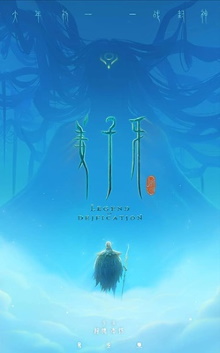
This is the follow-up to the surprisingly good Chinese animated film Nezha and part of what they are calling the Fengshen Cinematic Universe. In truth, it doesn’t look like there is much connection between the two films save that they are set in a sort of mythological version of China. If anything this one is even more fantastic and, yes, it is just as good. The art looks amazing and more importantly has a single consistent style and there’s certainly no begrudging the soaring ambition of its story.
It’s safe to say that everyone has heard of Anton Chekhov if only because of his famous dictum of creative writing using a gun as an example. But I don’t believe that I have actually read or watched any of his work. So it’s neat to watch this adaptation by essentially the same core team who made My Dinner with Andre. As usual, this is a talk fest that threatens to be deadly boring at first but it is very engaging once you know all the characters.
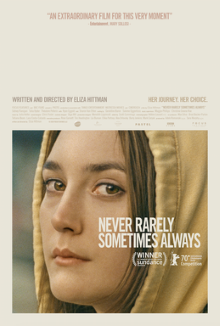
This has a slick, instantly memorable title that brings to mind perhaps a light, romantic comedy but I would never in a million years be able to guess the context in which the phrase is actually used. It is in fact a serious film about pregnancy and abortion and is shot from such a studiously objective point of view that it sometimes feels like a documentary. Nevertheless it makes for a powerful statement about the needless pain to which America subjects its young women in deliberately making it difficult for them to get an abortion when they want to.
I bought this a while ago, motivated mainly because I now own a Hori Mini Fighting Stick and wanted to try different fighting games with it. Also because I have never played a single Soulcalibur game before and this newest entry in the franchise features Geralt of Rivia as a guest character. Beyond the fact that it’s one of the few fighting games involving characters who are armed with melee weapons plus the character Ivy in it often appears as a sex object, I knew nothing about this franchise beforehand.