This is a show that has been much talked about and that my wife asked to watch. Shot entirely within a Hawaiian resort during the COVID-19 lockdowns, it has the trappings of luxury and glamor while being a comparatively cheap show to make. The opening scene teases a death to draw your interest and soon we’re introduced to a batch of rich and spoiled guests. The social commentary is lightly piquant, the little stories of their lives gossipy and it’s entertaining at least if intellectually unchallenging. Then it works towards the ending and I realize it’s one of the most cynical shows I can remember.
I don’t know what I was thinking when I added this to my list because films about BDSM rarely turn out to be very deep, no matter what the makers say. In this case it stars Nicole Kidman who makes a big deal about preferring to work with female directors and this was indeed directed and written by a woman Halina Reijin. The great innovation of this film is that it flips the script so that while the woman remains the submissive in the relationship, in real life she is the older and more powerful of the two. It’s interesting for a while but I had a hard time buying the plausibility of the character and the director flubs some key moments so badly that I just can’t take the film seriously.
This was another free game from Epic which I wouldn’t have bought on my own but was glad to try since it’s been a long time since I’d played a Civilization type game. Yet this isn’t Civilization, which makes it both interesting and tricky. There were many times I’d assumed the mechanics worked similarly and was proven wrong. I believe that this was designed so as to be completed at a more reasonable pace and in this it succeeds. Unfortunately its rules make it too game-like, almost like a boardgame writ large and so neither simulates well the history of nations nor feels very thematic.
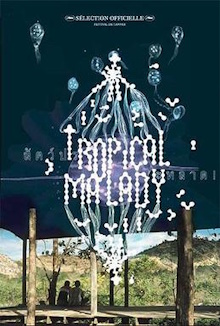
Being a big admirer of the work of Apichatpong Weerasethakul, I’d been searching for this title for a long time. It predates his 2010 breakout hit Uncle Boonmee Who Can Recall His Past Lives and was good enough to win the Jury Prize at Cannes. Unfortunately while the director’s fingerprints all over it are familiar and it even presages his later films in some ways, this is on the whole inferior. His ability to string together images into something that is compelling to watch is as magical as ever but both the story and the structure here are almost conventional and nearly boring.
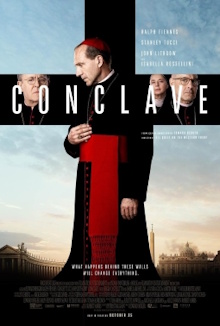
This film was remarkably well-timed, being released in November 2024 only for Pope Francis to pass away in April 2025, causing interest in it to spike. It’s fictional of course but its detailed portrayal of what exactly the election for a new pope entails was just what the world needed. There’s plenty of intrigue right from the beginning and scandals are not far behind. All of this seems reasonably plausible to me and makes for a riveting watch. Unfortunately the twist at the end is a leap of credibility too far as the election would never turn out that way in real life. I know that director Edward Berger is plumping hard for a liberal ending but this is just wishful thinking.
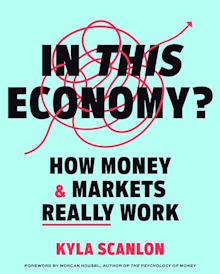
I added this to my list of books to read a while back, believing that it was a decent read about the modern economy. Kyla Scanlon made a name for herself by making financial education content on social media. She coined the term vibecession to capture the state of the economy that looks good in terms of conventional economic statistics but feels bad to ordinary people. I’d expected to know a lot about the basics of economics but this book still surprised me by how basic and watered-down it is. Worse, Scanlan places herself firmly as part of the Gen Z and so writes primarily for them. As such it espouses Gen Z values and ideals that I feel aren’t necessarily a part of economics proper.
We’d previously watched a film by Romanian director Radu Jade that was shocking and felt unique but I didn’t like it too much. This one about a female production assistant who also moonlights as a manosphere influencer at first looks to be similar shock cinema. I’m not sure if it’s because I have a better grasp of EU affairs or because I just understood more of the references, but I soon realized what a brilliantly sarcastic film this is. It says so much about the current state of life in Romania and its complicated relationship with the EU, and as such I’d strongly recommend this.