Despite having already watched this multiple times while studying in China my wife asked to watch it again after having gained more experience of cinema from all around the world. I suppose that as one of the most important films of China it’s about time that I watched it as well. It was the directorial debut of Chen Kaige and it was photographed by Zhang Yimou, arguably the two doyens of Chinese cinema.
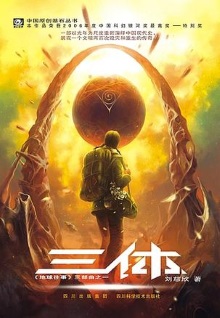
My wife had been bugging me for ages to read this book, arguably China’s best known science-fiction work for the moment. Written by Liu Cixin, it was first serialized in a magazine some years back. Of course I had to first wait for it to be translated to English and for it to be released at affordable paperback prices. In the meantime, the book went on to win the Hugo Award for Best Novel last year, though it was amidst the chaos created by the Raid Puppies and the Sad Puppies. The version that I eventually got was on Google Play Books. Note that this write-up will be full of spoilers as it will difficult to say much about it otherwise.
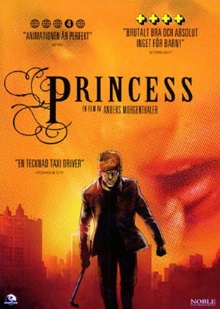
This one was a recommendation from our cinephile while we were in the middle of talking about unusual animated films and it’s obscure enough that I doubt that I would have heard of it in any other way. It’s a Danish film made by director Anders Morgenthaler who apparently made his reputation from a newspaper-published comic strip. It’s also very much an adult film as it has explicit sex scenes and very unusually includes a significant amount of real-life footage.
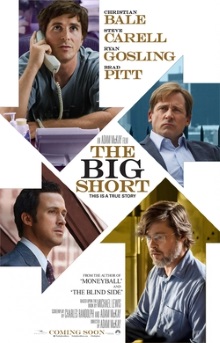
Margin Call was one of my favorite films in the year of its release and to this day it’s one of the first things that come to my mind whenever I think of good examples of cinema that try to cover current events. It helps as well that the subject of the financial crisis of 2007 to 2008 is personally very fascinating to me as a key challenge to modern capitalism. Arguably we can even detect the seeds of the rise of illiberalism that we see everywhere today in that crisis as the economic damage that it did to the working classes was never fully repaired. So it makes sense that I was highly interested in this adaptation of the famous book by Michael Lewis about what is known as the worst recession since the Great Depression.
This post covers the mini-campaign that was included in the Extended Edition of Shadowrun: Hong Kong. This was released for free to all owners of the original game and was one of the KickStarter campaign’s bonus goals. In the event, the release passed almost without notice. Even now, there doesn’t seem to be any walkthrough or guide for it on the net, which is pretty remarkable given that there’s a guide for every little game out there. Still, it’s free and there are Steam achievements for it so I had to play it.
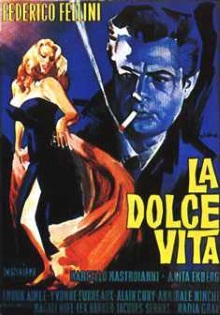
I loved each and every one of the Federico Fellini films I’ve watched so far so it’s not surprising that I had a high level of anticipation for this one. La Dolce Vita is one of the great director’s major works, coming in at three hours long. It’s also highly rated by critics. Roger Ebert notably considered it Fellini’s best film and wrote first ever review for it. Unfortunately I liked it the least of his films that I’ve seen so far. I find it great in parts but it just doesn’t add up to enough of a coherent whole for me.
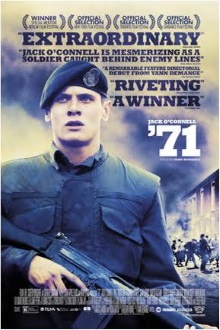
This film has been on our watch list for a while as it is considered one of the most notable releases of 2014 so watching it now is a complete coincidence. Still, seeing it just after the Brexit referendum makes for a particularly poignant reminder not to take the national unity of Britain for granted. It’s the debut work of its director Yann Demange and as you should guess by now it’s a take on the Northern Ireland conflict, focusing on one particular night in 1971.