This is one game I always knew I had to play even back when it was first released. Yet putting it off was the right decision because all the additions made to the final edition of the game including most importantly fully voiced dialogue for all characters makes it so much better. The voice acting is so critical and of such high quality in this game that I couldn’t imagine experiencing this game without it. There are some flaws in this game, such as how the plot is railroaded to go through some key bottlenecks no matter what you decide to do. But I love this type of dialogue-heavy, skill check-based RPG and I really want developers to make more games like this.
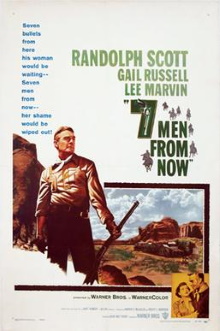
You might think that a traditional Western played completely straight may not make for a very interesting film but it is! The plot is entirely conventional and ultimately predictable though the film keeps things interesting by having all of the characters be cautious about revealing their true motivations. Yet what really impresses me is how understated the action is, placing dramatic weight instead on the clash of personalities and integrity of the characters. This doesn’t seem to be a particularly well-known film and I don’t remember how it even got added to my list but it really is a film that deserves greater acknowledgement.
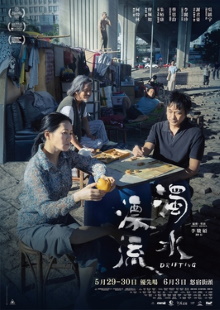
This Hong Kong film is partially based on a true event involving government workers clearing the shacks of homeless people in Sham Shui Po. For a while I was inclined to dislike it as it seemed like an overly sentimental take on a complex issue, falling into the trap of the recent spate of Hong Kong films that are well-intentioned but simplistic. Then I realized that the opinions of its main character might not be the film’s own opinion and indeed some of the other homeless people call him out for his stubbornness. Perhaps director Jun Li might personally be more sympathetic to those views than I’d like but at least he proves that he has thought through it carefully and that makes me feel a lot better about this film.
We’re back to having more science news than I can reasonably cover. Hopefully this represents a decent selection of the most significant announcements.
Starting with the easier to grasp and happier pieces of news, we have the welcome success of lab-grown blood transfused into a human. Stem cells are extracted from a normal donation of blood, encouraged to grow and then guided to become complete red blood cells. This effectively creates a larger usable supply from small donated amounts. So far the trial uses only very small amounts to determine safety and the process is too expensive for widespread use. It may be a viable means to help with extremely rare blood types however.
Another piece of good news talks about some unexpected benefits of protected marine sanctuaries where fishing is banned. The normal benefit is that population numbers of valuable species inside the protected area boom and overspill into outside areas where fishing is allowed. A study in Norway however also found that lobsters inside the protected grow larger and exhibit bolder behaviors. In effect, as laws ban the harvesting of lobsters below a certain size, lobsters have grown smaller and become more timid to avoid being caught in traps. The existence of the protected areas counteract that, which improves the quality of the fishing just outside of them as well as the quantity.
In less happy news, a set of studies examined whether or not cannabis use can somehow promote creativity. Using outside evaluators to assess the quality of creative work, the studies found cannabis use didn’t significantly improve the creativity of users. But it did make them happier and made them believe themselves that they were more creative. But as the article notes, it’s still possible that cannabis use boosts cognitive abilities that weren’t measured or that already creative people are simply more likely to use cannabis in the first place.
The next paper is from the field of macroeconomics and discusses dynamic stochastic general equilibrium (DSGE) models. These models are the predominant framework of macroeconomic analyses. The authors of this paper subject a version of this model to some statistical tests, effectively testing if the model can predict its own simulation. They also test how well the model fits nonsense data. Even with centuries of data, the forecasting error is very high and swapping in nonsense data might actually yield better results. I don’t know enough about how these models work and about statistics to judge the validity of this paper for myself but it seems like a serious challenge that the field of macroeconomics must answer.
Finally my favorite of the announcements this month is about a novel way to measure time. It involves pumping atoms with lasers such that they enter a high-energy state called a Rydberg state. The movements of electrons under such conditions are subject to quantum effects and are described as a Rydberg wave packet. More than one such wave packet interfere with one another and this interference can be used as a measurement of time. The interesting part is that there is no need to predefine a starting time so scientists can measure any event they want to observe and compare it to the signature of interfering Rydberg states to note how long it lasts. Plus this measurement of time is entirely self-contained and does not rely on some other measured quantity.
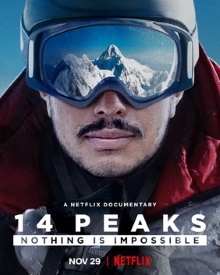
I was a little hesitant to watch this because on the surface it feels like it’s just another mountaineering documentary so why watch more of the same. What makes this particular project interesting to me is that it was conceived and led by a Nepali Nirmal Purja with a team of fellow Nepali climbers. As such it’s a deliberate attempt to move away from the old tradition of Westerners leading mountain expeditions and the Nepali sherpas being credited only as assistants. I also appreciated that this film, unlike so many others, actually goes into the difficulty of raising money in the pursuit of such an insane dream, on top of the physical and mental challenges of the climbing itself.
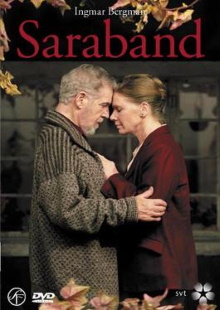
This was Ingmar Bergman’s last film and the sequel to Scenes from a Marriage. Just as it was made some 30 years after the television series, this film picks on up Marianne and Johan 30 years later as well. The premise is deceptive though as the main story is really about new characters, Johan’s son and granddaughter from a later relationship, rather than the old couple. This allows Bergman to explore fresh themes, in this case the relationship between a parent and a child, and that is welcome but it is a chore to muster up enthusiasm for entirely new characters who are unknown to us.
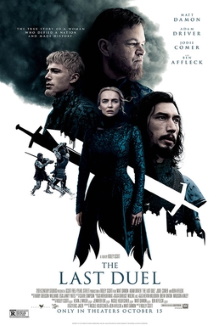
This film by Ridley Scott features a triptych structure to tell its story from the perspectives of its three main characters. That instantly earns comparisons with Akira Kurosawa’s Rashomon. Unfortunately this film is simply unworthy of the comparison as the treble format here is an unnecessary indulgence that detracts from the film instead of enriching it. The film is technically well made and the duel at its center is one of the most brutal and realistic ones I’ve ever seen. But it is confused about where its emotional and dramatic heart is and really only needs one point of view.