Decent mix of stuff though all in the life sciences.
Easily the most exciting of the lot is the discovery of a new class of programmable DNA modifying systems. In this blog, I have talked many times about CRISPR and how it is a game-changer in enabling easy DNA editing but it is always better to have more than one tool in your toolbox. The acronym for this one is OMEGA, standing for Obligate Mobile Element Guided Activity. This is an RNA-guided DNA-cutting enzyme that originated in bacteria is only about one third the size of the Cas9 protein, which should help make it even more useful. Needless to say this is early days yet and we have no way of knowing if this will eventually be deployed but it is exciting news.
One bit of news that has been all over the net this month is this paper about how quickly some elephants in Mozambique have evolved to lose their tusks as a response to poaching. The elephant population declined by 90% at the height of poaching activity but as the population recovered, more elephants are born tuskless. All of them however are female as the gene responsible for the change is lethal when expressed in male elephants but females can survive the mutation if they receive a non-mutated version of the gene in one of their two X chromosomes. Of interest is how quickly tusklessness increased during the Civil War that enabled widespread poaching and also now that the situation has stabilized female elephants are regaining their tusks as they are after all a useful tool.
The next bit of news shouldn’t be much of a surprise but I think it makes for an interesting wake up call. It’s about a survey of wildlife, specifically wild boars and rat snakes, in the Fukushima Exclusion Zone which found no significant adverse health effects in the wildlife despite the exposure of varying levels of relatively low-dose radiation exposure. The team suggests that perhaps people shouldn’t be too fearful of moving back into the area but it goes without saying that health standards for humans and wildlife are very different, and rightly so. To me, this shows as in Chernobyl, that the wildlife is able to bounce back quite well following environmental disasters as the benefits from the simple absence of humans outweigh the adverse effects of the pollution.
Finally, and I think this bit will resonate with quite a few people as we have all had to sit through the sales pitch at opticians’ shops, we have a paper about a randomized controlled trial that aims to determine how helpful blue-blocking lenses really are. This is a straightforward and simple experiment involving participants wearing glasses who were all led to believe that they were using such lenses and assigned to various computer tasks. Afterwards they tried to measure the eye strain experienced by the participants and found no significant difference between those actually using the blue-blocking lenses and those who weren’t. One possible objection is that the period of time under study, two hours of computer use, is relatively short but this isn’t the first time that objections have been raised that these lenses are an expensive add-on of doubtful benefit.
I’ve watched so many films in so many languages from so many countries but rarely has one felt as alien as this one during its opening scenes with its sputtering outbursts of “War starts at midnight!” It’s the combination of the familiar with the utterly absurd of course and this is only one of many reasons why this is such a brilliant film. This has been called the greatest British film of all time and you can tell why because the central theme of the film is really Englishness itself. I understand that the character of Colonel Blimp originated in comic strips as an object of mockery but this version is actually very sympathetic and lovable.
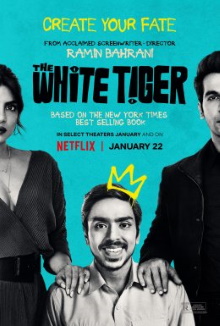
Rags to riches stories are a dime a dozen but this one stands out for being so unapologetically dark. Adapted from the novel that won the Man Booker, the conception of this film makes for a fascinating story as well. The novel’s author chose Adarsh Gourav, a college friend, to direct it, famous actress Priyanka Chopra asked to be involved after reading about the production on Twitter and the lead role was given to a relatively unknown actor Adarsh Gourav. This is not a subtle film and it is plot-driven rather than character-driven but it is undeniably effective at rousing your emotions against the injustice you see in it.
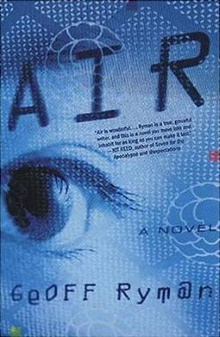
Geoff Ryman isn’t an author who I’d read previously but this novel is so good that I feel like I’ve been missing out this whole time. The thing is his work doesn’t seem to get nominated for the Nebula and Hugo awards and I’ve long contended that there is a frustrating sense of sameyness in the works that do get nominated. This novel feels refreshing different and wears it more fantastical elements lightly enough that it could pass for a mainstream novel. But it is a solid science-fiction novel, not just in its use of novel technologies as a plot element but in its attitude towards change and progress.
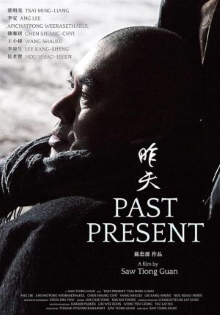
The last and easily my favorite of the Isle to Isle documentary screenings is one about Tsai Ming-Liang, perhaps the most renowned director to emerge from Malaysia though he is probably considered Taiwanese by now. Pleasingly this one was made by a very young filmmaker who is himself Malaysian Saw Tiong Guan and focuses largely on Tsai’s childhood in Kuching, Sarawak. By pulling on the nostalgic power of old music and shots of Tsai walking the streets of Kuching, this documentary consciously strives for, and somewhat achieves, the atmosphere of Tsai’s own films. This makes it one of the most effective documentaries I have ever seen.
I’m viewing these documentaries as part of the Isle to Isle event on the CloudTheatre platform so I’m sure the organizers must have noticed the thematic similarity between this one and André and His Olive Tree. This one is about Chang Ga-tau, the founder of one of Taiwan’s largest independent record companies Taiwan Colors Music, agonizing over whether to retire after 20 years in the business and selling his company. Once again I think it overdramatizes this decision for the sake of a making a film, and they even lampshade this in the after credits, plus the story of a record label owners probably isn’t as interesting as that of the artistes but it is a decently interesting look into Taiwan’s music scene.
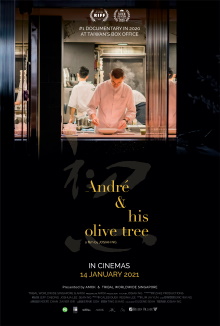
André Chiang is feted as Taiwan’s first and so far only Michelin-starred chef and is apparently considered one of best Chinese-born chefs in the world, making him a great subject for a documentary. Yet the climax that this entire film builds towards is the closure of his famous restaurant in Singapore, apparently quite a shock to everyone at the moment, making the film itself feel rather different from other celebrity biographies. There were times when I felt annoyed by this documentary as it felt too much like a posh advertisement for Chiang but it improves immeasurably after the man lets down his guard a bit in his native Taiwan and allows his more personal side to be shown.