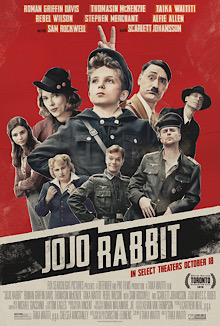
Taika Waititi is pretty hot stuff as a director these days and it’s amazing to watch his career grow from strength to strength from the earliest beginnings. This latest project takes on Nazis as an object of humor and it would so easy to misstep here and create all kinds of controversies. Indeed there are critics who assert that one should never make light of Nazis or the Holocaust, no matter how well intentioned. I would argue that enough time has passed that we can and should make jokes out of them if the intent is to mock those worthy of our contempt and derision and this film is a magnificently creative step in that direction.
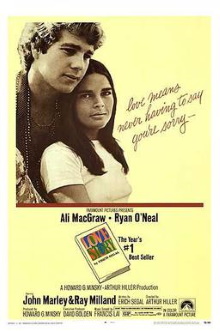
Apparently this is one of the most iconic romantic films of all films, enough so that my wife was surprised that I haven’t watched it. I have to admit that I certainly recognize the theme song even if I never knew that it came from here. The film itself however is pure sentimental pap that could only have ever worked in that era as it makes absolutely zero effort towards realism or authenticity. Even the film’s famous catchphrase is too shallow as critics of the era recognized.
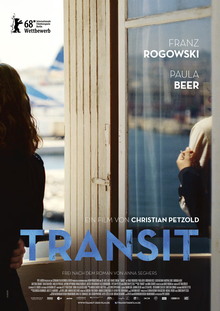
This German film was highly regarded enough to be placed on the top of multiple critics’ best of lists but I find it to be mostly a missed opportunity. The script, the acting and the themes it invokes are all great but the setting is just all wrong and the visuals don’t at all match what is supposedly happening. It turns out that this was an adaptation of a novel set during the Second World War but the director Christian Petzold transposed it to the present day. I presume that this was due to budgetary reasons because it was dreadfully done and really harms the overall quality of the film.
So I dropped working on Blender stuff a few months back and instead I have been learning the Thai language online. I don’t have any special reasons for doing so. It’s just that I’ve gotten into the habit of learning new things online all the time and I thought it’s time I tried a language next. It is one of the things people keep saying they intend to do and rarely get around to and I haven’t learned a new language since I learned French during my university years. Learning a new language is supposedly one of the best ways to keep your brain sharp and active as you age.
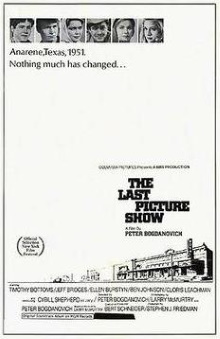
Peter Bogdanovich is another director I’ve never seen anything from before. Associated with Orson Welles, he was heavily featured in They’ll Love Me When I’m Dead. The film was also the debut of Cybill Shepherd. It was filmed in black and white, an unusual decision for the time apparently made after discussing it with Welles. Indeed the whole film, set as it is in the 1950s, feels like it belongs in a different era and right off of the pages of a novel.
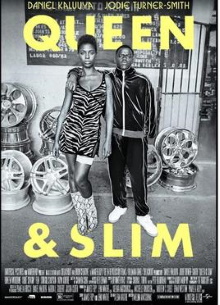
This film was released in 2019, which means that the project must have started at least a year or two before that. Yet events that need not be mentioned this year have made it so cogent that it feels almost too raw and too potent to watch today. It is frequently described as the black Bonnie and Clyde and the film itself even drops that line, but it is so much more than that and intelligently uses the reference to demonstrate how differently black people are viewed and treated.
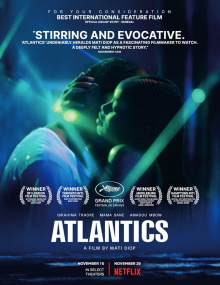
I love watching films from countries whose cinema I’ve had no prior exposure to as everything seems so fresh and novel and there’s a wonderful feeling that anything is possible. This is truer than usual for this Senegalese film, the directorial debut of its woman director Mati Diop. Diop was born in France but it seems that her family is a fairly prominent one in Senegal and this certainly feels both authentic and powerful to me.