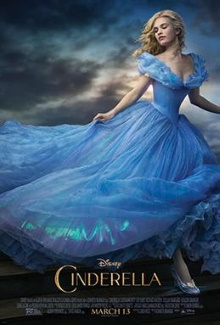
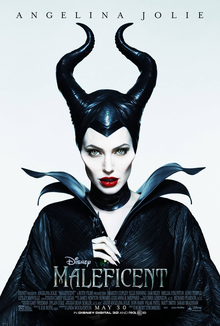
Next up on the list of Disney live-action remakes is this one which seems to be relatively low profile as I wasn’t even aware that it existed. Unlike Maleficent, this is not a reimagining of the original with a modern twist, it’s a straight up remake with only cosmetic changes with perhaps a small update to the motivations of the evil stepmother.
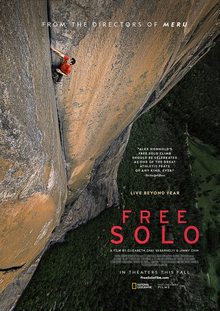
If nothing else I know that documentaries about mountain climbing will always feature spectacular scenery. This one not only doesn’t disappoint in this regard but even one of the scariest, most thrilling films I’ve watched so far this year. It really does make a difference when you know that what you see is real and not a carefully crafted simulation made in a special effects studio. It’s actually scary enough that it merits a warning and it rather successfully convinces you that Alex Honnold who is the climber featured here is borderline suicidal.
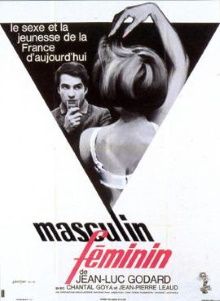
After a slew of not that challenging to watch films, here’s one by Jean-Luc Godard whose works can always be relied on to mystify the audience. This one even stars Jean-Pierre Léaud, unrecognizable though he is from his The 400 Blows days, so its inclusion in the canon of the French New Wave is unquestionable. With almost no plot, a very idiosyncratic organisation and enlivened by unexplained odd events, it certainly makes you work to puzzle it out.
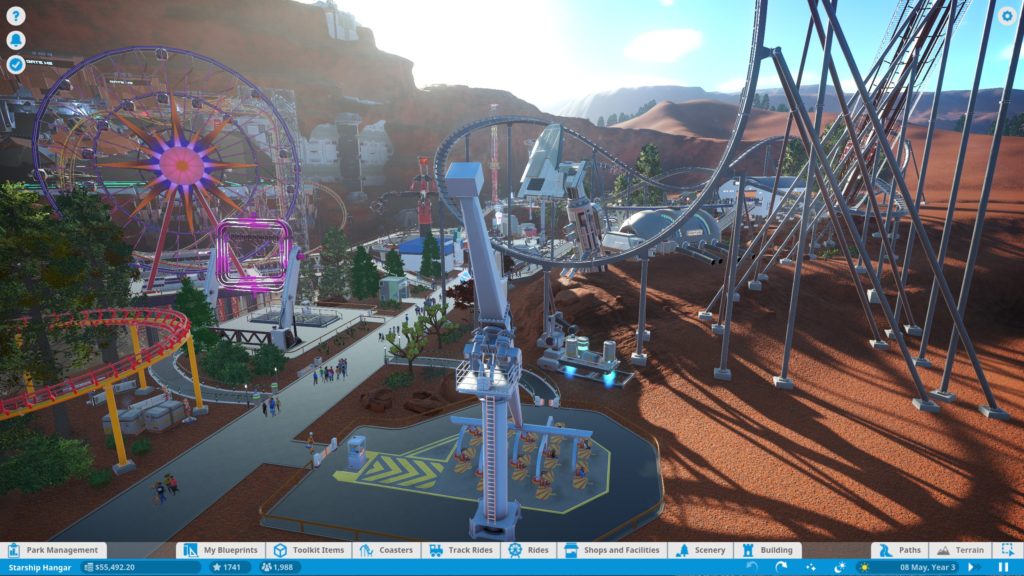
So I’ve been racking up a lot of hours in this game and it’s been great. I remember playing the old Rollercoaster Tycoon games and I inevitably burned out on them after only a short while. With this one I actually managed to complete all of the scenarios in career mode though I did cheat by downloading blueprints for coasters and buildings on the Steam Workshop to make things easier. I also bought one of the many DLCs available, specifically the Magnificent Rides Collection, and though I didn’t realize it at first, it actually makes the scenarios much easier as well.
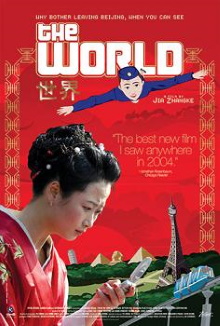
So last time around I said I was done with films by director Jia Zhangke, yet here is another one of those again. The answer is that this one dates from much back and is in fact one of the director’s earliest films. I had this on my list for a very long time but finding it was very difficult. As it turned out we found this one to be a fair bit better his newer films but it is still flawed.
I have not thus far watched a single one of Disney’s CGI-heavy live-action remakes of their old animated classics, judging them to be of doubtful artistic merit. However as a friend recently asked us to find a full set of them for her children, I thought we might as well watch them ourselves, spreading them out over time. They take very little effort to watch and might even be a little entertaining. I picked this one to start with as it is chronologically the earliest.
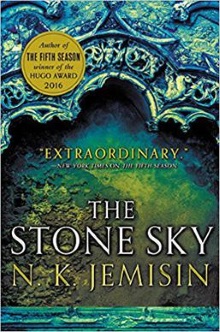
It occurs to me with this book that I haven’t properly finished reading a traditional trilogy of novels in a long while. I still think it’s ridiculous that every book in the trilogy won the Hugo and I don’t agree that it stands on the same level as the true greats of fantasy and science-fiction. But I would happily agree that this is a rollicking good read and this last book does bring the series to a more or less satisfying conclusion.