Ever since I started watching films seriously, I’ve been a bit obsessed with lists of the best films. It goes without saying that these are always highly subjective and prone to all sorts of biases but they’re awesome for knowing what’s out there. The problem with lists of great cinema is that they’re heavily weighted towards the great films of the past so that it’s hard to spot anything recent on them. This is why one of the most interesting lists I’ve seen recently is one that limits itself only to films released so far in the 21st century and this film by Paolo Sorrentino had a strong showing on it.
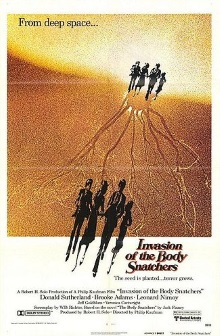
If you’ve heard about the term “pod people” but have never watched Invasion of the Body Snatchers, well, now you know where it comes from. I didn’t know this myself until I watched this film and I’ve even watched the 2007 remake starring Nicole Kidman and simply titled Invasion. That version admittedly isn’t very good and doesn’t have pod people at all. I also didn’t realize until after the film was over that this 1978 version is also a remake of the original that was made in 1956. It always seemed to me that this version is more well known, especially since the iconic final shot of Donald Sutherland is a popular image on the Internet.
I would be remiss if I didn’t include the biggest scientific news of the month but honestly, there’s so little information here that it’s barely worth getting excited about. This refers to the announcement that astronomers have found a planet within the habitable zone of Proxima Centauri, which being 4.2 light years away, is the closest star to our own system. Here’s a decent article about it. The most important thing to remember is that the planet being in the habitable zone doesn’t actually mean that it’s habitable. It just means that it’s right distance away from its star such that water can exist there in its liquid state. In particular, because Proxima Centauri is such a cool star, the newly discovered star orbits really close to it, which means that it must be bathing in radiation and any potential life on the planet must be subject to a host of other similarly hostile conditions.
This CBC article talks about how the common wisdom that turtles are the longest lived animals may be wrong. A recent study found that the Greenland shark may have a lifespan of 400 years. This determination was difficult to make as obviously this far exceeds the duration of any scientific study and the scientists must use estimates based on dating how old the animals are. In this case, they used radiocarbon dating techniques on the lenses of the sharks’ eyes and found that their average ages are well over 200 years. It is also thought that they only reach sexual maturity between the ages of 130 and 170.
Next, there’s this report about Japan about how a woman was successfully diagnosed that she is suffering from a rare form of leukemia using IBM’s famous Watson system. The patient was initially diagnosed by doctors of having a different form of the disease but the doctors were stumped when she failed to respond as expected to the treatment. The AI however was able to sift through much more data than human doctors can handle to point the doctors in the correct direction. This comes on the heels of many other recent announcements of AI being used in unconventional ways, including recommending sentences for criminal uses to judges and helping teachers to create customized learning plans for individual students.
Finally The Economistcovers an intriguing discovery that men may be better than women at making up after a conflict. The study focuses on athletes. Competitors in many sports are expected to make peaceful physical contact after an event, shaking hands for example or embracing. The scientists found that such making up activities seemed more genuine in men than in women. The men would grasp hands for longer, even pat shoulders or touch arms after the initial contact. Women on the other hand seemed to do the minimum that was required by convention and no more. The speculation is that men may be better conditioned than women to regard conflicts as being nothing personal and not to hold grudges after a winner has been determined.
Spirits’ Homecoming was released only earlier this year, which is why unlike pretty much every other film covered by this blog, it has yet to be honored with any awards. It’s a sure thing though that by this time next year it will earn plenty of awards if only because of public sympathy for its subject matter. I’m less certain that it deserves such honor based on its merits alone as it’s just not that good a film but I will agree that it’s worth watching anyway for its historical significance.
As I’ve mentioned plenty of times elsewhere, I grew up with gamebooks as a kid and I’m still fascinated by how they could be adapted to digital media. The Fighting Fantasy books were never my personal favorite series but I was always impressed by the incredible variety of genres they included. It’s not a big surprised that I preferred the non-fantasy books to the all too common fantasy ones. This computer adaptation of the standalone Sorcery! books unfortunately is fantasy but they’re pretty much the only ones available so far. Since I never played these books back in the day and I am intrigued by how well they pulled off the adaptation, so this was one of the main reasons why I plonked for that narrative bundle a while back.
Browsing the Lowyat forums for opinions about cinema is usually like diving into a cesspit but this one was an interesting suggestion that I believe I first saw there. Completely by coincidence, it also shares a similarity with the other film we watched this week: like The Hateful Eight, Baraka was filmed in a 70 mm format though this one used the even rarer and now defunct Todd-AO system. This film fully justifies the expansive format though as it is a documentary with absolutely no narration and no dialogue. Everything therefore rests solely on the power of its visuals and the brilliance of its musical accompaniment.
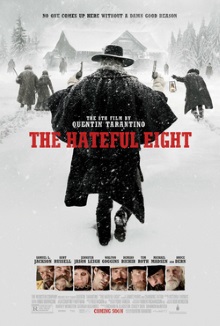
I can’t say that Quentin Tarantino is one of my favorite directors but his Pulp Fiction certainly led some of my earliest realizations that the cinematic world is larger and richer than I had imagined. I’ve since watched nearly all of his films and while they usually each have their good points, none can really match up to his earliest works. In particular, I thought Django Unchained was a beautifully shot but rather generic action movie. I probably would have skipped this one if it weren’t for the fact that the posters on Broken Forum had some interesting things to say about it.